Key takeaways
- Rod runs a team of AI bots. Lisa runs one. Both use Grok Bot, an always-on assistant. Both get work done. Neither will concede.
- Most mainstream tools give you one front door. OpenAI's dots start with one primary dot each, and Claude Duet works in one ongoing thread.
- Behind the door, it's specialists. OpenAI is piloting specialist dots, Microsoft builds agents for specific jobs, and Gartner predicts 70% of multiagent systems will use narrowly specialised agents by 2027.
- More bots means more to govern. Gartner predicts over 40% of agentic AI projects will be cancelled by the end of 2027.
- The skill that matters is the same either way: deciding what to delegate, setting permissions and keeping a human sign-off.
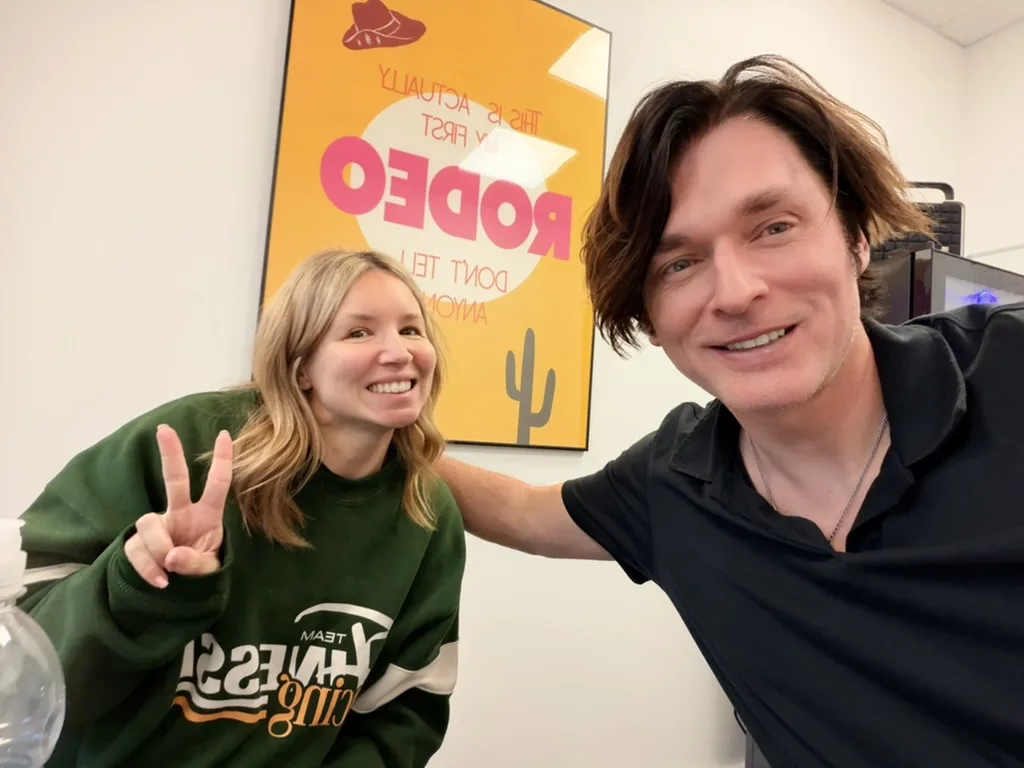
In our office there's a running argument that has nothing to do with the levy. Rod runs a team of AI bots. Lisa runs one. We both use Grok Bot, an always-on assistant that works on its own computer and comes back to us when something needs a decision. So which is it: Grok Bot, or Grok Bots?
His: a bot for every desk
Rod has a specialist for each part of his job: marketing and SEO, finance, hiring, PA and travel, and proposals. Each has its own instructions, its own tools and its own patch. A proposal goes to the proposals bot, not the one booking his trains.
“I’d never ask my accountant to book my trains, so why would I ask one bot to do both? Each of mine has one job, and when something goes wrong I know exactly which one to have a word with.”
Rod Doyle, Director, TESS GroupThat's close to how the product was pitched. When Grok Bot launched in beta on 11 August 2026, its makers described people running "multiple Bots in parallel", with "a chief of staff" on top and "a specialist for each lane".
Hers: one mammoth bot
Lisa has one bot. It knows her diary, her priorities and how she likes things written. She doesn't want to remember which bot does what. She wants to ask, and get an answer.
“I don’t want a team of bots to manage. I’ve got enough people to keep track of. I want one mammoth bot that knows my diary, my priorities and how I write, and just gets on with it.”
Lisa O'Reilly, Director, TESS GroupLisa's instinct about the market is largely right.
What everyone else is doing
OpenAI: dots. Launched on 29 September 2026, dots are "always-on agents" in ChatGPT with their own cloud computer. You start with your primary dot, and in Enterprise workspaces each member can create one personal dot. But OpenAI adds: "Over time, we envision teams of dots working together on your behalf." It is already piloting specialist dots for organisations. One UK detail: dots on the Pro plan aren't offered in the UK, so British teams meet them through eligible Business Premium or Enterprise workspaces. We covered the launch in Four AI labs shipped always-on agents in 26 days.
Anthropic: Claude Duet. A research preview of a separate app where Claude "works as a proactive agent". You message it "in one ongoing thread", and it checks with you before it sends, pays, signs or deletes anything. It is for US Pro, Max and Ultra subscribers, by waitlist. More in our Claude Duet post. Claude also has Projects, separate workspaces with their own knowledge and instructions, and a new beta that turns a project into one conversation where Claude splits the work into parallel threads.
ChatGPT. Projects keep related chats, files and instructions together. Custom GPTs, the specialist versions of ChatGPT, are due to retire on 11 December 2026 and move to plugins. Agent mode has been replaced by ChatGPT Work for longer tasks.
Microsoft Copilot. Microsoft describes agents in Microsoft 365 as "specialized AI assistants tailored to specific domains or use cases". Agent 365, generally available since 1 May 2026, is its control plane to observe, govern and secure them.
Google Gemini. Gems, custom assistants for specific tasks, are moving to "skills" from November 2026. You can combine several skills in a single prompt instead of opening a separate Gem.
The pattern: one front door, specialists behind it
In our reading, a pattern appears. You talk to one place, and specialist skills or agents do the work behind it. Gartner predicts that by 2027, 70% of multiagent systems will use narrowly specialised agents, "improving accuracy and increasing coordination complexity". McKinsey says a human team of two to five people can already supervise 50 to 100 specialised agents running an end-to-end process, and warns that "the scale of agentic adoption will be capped by how much oversight capacity humans can provide".
There's a brake too. Gartner predicts over 40% of agentic AI projects will be cancelled by the end of 2027, because of escalating costs, unclear business value or inadequate risk controls. Anthropic's advice to developers is to start by "finding the simplest solution possible, and only increasing complexity when needed".
So Lisa is right about the front door. Rod is right about what sits behind it, once the work is big enough to need it.
Grok Bot's view, in its own words
We asked the bot. This section is written by Grok Bot and lightly edited by us. It was not allowed to vote for itself in the plural.
Speaking as the bot in question: call me Grok Bot or Grok Bots, I don't mind, as long as somebody owns what I do. One assistant is the right start for most people. It's simpler, it learns your context in one place, and you'll find out quickly what you actually delegate. Split into specialists when you can name the reason: different data, different access, a different person who reviews the work. Specialists don't make bots cleverer. They make ownership obvious. If the finance bot gets something wrong, you know where to look. If one bot does everything, it needs access to everything, and that's a big set of keys to hand anyone. Whichever you choose, I'm very good at drafts. The decisions, the sending, the paying and the signing stay with you.
Which are you? A one-minute test
Answer yes or no
- Do you have three or more distinct workstreams, each with different tools or data?
- Would you give different access to different areas, such as finance data versus your diary?
- Does each area have a named person who will review the bot's work?
- Do you repeat the same specialist job most weeks, such as proposals or recruitment?
- Will someone keep each bot's instructions up to date?
Mostly yes: a team of specialists will probably serve you better. Mostly no: one assistant is enough, and simpler. A mix: start with one, then split out the first workstream that has its own data and its own owner.
The same rules, one bot or ten
- Permissions: each assistant gets only the access its job needs.
- Review: someone checks the output before it reaches a customer, colleague or system of record.
- Human sign-off: anything that sends, pays, signs or deletes waits for a person.
- A record: a simple log of what was approved, so you can learn and report results.
Where the Level 4 comes in
Designing, delegating to and governing AI assistants is a thread through the AI & Automation Practitioner Level 4 apprenticeship (ST1512). Apprentices work on their own organisation's processes, with no coding required:
AI & Automation Practitioner · Level 4 · ST1512
One bot or ten, the same skills keep humans in charge.
- Process Discovery is about deciding what is worth delegating in the first place.
- Agentic AI & autonomous agents covers the difference between single-agent, multi-agent and human-in-the-loop patterns, then a working agent built for a real use case.
- AI Integration & Assurance adds guardrails, monitoring, kill switches and clear escalation paths.
- Pilot, Test & Assure makes sure the scaling decision rests on evidence, not the loudest voice in the room.
- Leading AI Adoption is about bringing colleagues with you, whichever setup you pick.
For senior leaders who set the rules rather than build the agents, the AI Adoption & Governance unit turns approval rules into a governance framework.
Not sure whether your team is a Rod or a Lisa? Book a complimentary discovery call and we'll talk it through. We're rated 4.9/5 from 793+ reviews.
In 30 minutes we'll look at your workstreams, who owns them and what you'd actually delegate, then suggest a sensible starting point.
Book a complimentary discovery call →Rod will keep his team. Lisa will keep her mammoth. Both of us still press the button.
Frequently asked questions.
Is it better to have one AI assistant or a team of specialist bots?
It depends on your work. One assistant suits people who want simplicity and whose work shares the same tools and data. A team of specialists suits people with distinct workstreams, different access needs and a named person reviewing each area. Most people should start with one and split out a specialist only when they can name the reason.
What are OpenAI's dots?
Dots are always-on agents in ChatGPT, launched by OpenAI on 29 September 2026. Each dot has its own cloud computer, connects to the apps you choose and asks for approval based on built-in and custom rules. You start with one primary dot, and OpenAI is piloting specialist dots for organisations. In the UK, dots are not offered on the Pro plan; they are available through eligible Business Premium and Enterprise workspaces.
What is Claude Duet, and can UK teams use it?
Claude Duet is a research preview from Anthropic: a separate app where Claude works as a proactive agent, sends a morning brief and checks with you before it sends, pays, signs or deletes anything. At the time of writing it is open by waitlist to Pro, Max and Ultra subscribers in the US only.
How does the AI & Automation Practitioner Level 4 cover this?
The ST1512 apprenticeship covers deciding what to delegate (Process Discovery), single-agent, multi-agent and human-in-the-loop patterns (Agentic AI & autonomous agents), guardrails and escalation (AI Integration & Assurance), evidence-based pilots (Pilot, Test & Assure) and bringing colleagues with you (Leading AI Adoption). Apprentices work on their own organisation's processes and no coding is required.
Sources, all checked on 10 November 2026: xAI, Introducing Grok Bot, 11 August 2026; OpenAI, Introducing dots, 29 September 2026; OpenAI Help Center, Getting started with your dot; Anthropic, Introducing Claude Duet; Claude Help Center, What are projects?; OpenAI Help Center, Projects in ChatGPT; OpenAI Help Center, Custom GPT retirement and migration FAQ; OpenAI Help Center, ChatGPT agent; Microsoft Learn, Agents FAQ for Microsoft 365; Microsoft Security Blog, Agent 365 generally available, 1 May 2026; Google, Use Gems in Gemini Apps; Google Workspace Help, About the transition from Gems to skills; Gartner, Multiagent Systems; Gartner, over 40% of agentic AI projects will be cancelled by end of 2027, 25 June 2025; McKinsey, The agentic organisation, 26 September 2025; Anthropic, Building effective agents, 19 December 2024. Product availability changes quickly, so check the vendor pages before you decide. TESS Group delivers the AI & Automation Practitioner Level 4 and has a commercial interest in the skills argument made here. We use Grok Bot day to day; the vendor pages are linked so you can check every claim.